

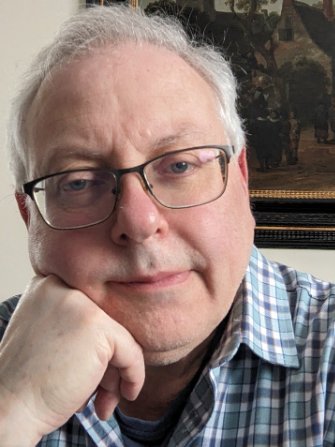

The Interview - Alex Pearl

Website:
Visit the site
If your book were turned into a movie, who would you cast?
If The Chair Man ever made it onto the big screen I'd cast Hugh Bonneville as Michael Hollinghurst, the novel's protagonist. Hugh isn't particularly known for playing serious characters in dark thrillers, but he has all the right qualities. He could easily play a successful English lawyer (he studied law before turning to acting). And there is a vulnerability to him beyond the stiff-upper-lip persona that lends itself well to the Hollinghurst character. His humanity also shines through, which is important because there is a warmth to the Hollinghurst character despite the bitterness he feels towards the terrorists who have shattered his life.
Which book of yours was the most difficult to write, and why?
The most difficult book to write was The Chair Man as there was a huge amount of research I had to do. But you don't want to use too much of it otherwise you will bore the reader and slow down the narrative. But you have to know this stuff to have the confidence to write it and make it authentic. So I spent a couple of years reading and taking notes before I could even start writing the novel.
What’s a fun fact about you that most readers wouldn’t know?
As a teenager I was once inadvertently locked in a record shop on Christmas Eve. The staff had locked up while I was at the back of the shop and left all the lights on, so I had no idea that I'd been locked in until I found a record I wanted to buy and didn't get served. Fortunately, the shop had a phone. (This was well before the mobile phone had been invented.) So I called home and in turn my father called the police who eventually located a caretaker with the keys. It took about three hours before I was finally released from my temporary prison.
How do you prepare for book signings or public readings?
I type up what I want to say. This obviously starts with a thank you to everyone who has made the effort to attend. Then I give them a bit of background to the book, why I wrote it, the protagonists, and the nature of the story. Then I invite the audience to ask any questions before finally reading a short extract usually from the prologue.
Do you outline your books, or are you more of a ‘pantser’?
Yes. I write a very detailed synopsis. And spend a long time constructing this so that the story is credible but also unpredictable. And a surprising twist in the tail is absolutely vital. Once I am happy with the synopsis I begin to write, but there are always developments and surprising changes to the synopsis that happen along the way. But the overall narrative won't change drastically.
What role does research play in your writing process?
Research played an important part in writing The Chair Man, as I knew nothing about the ways in which terrorist cells communicated to each other in 2005. Nor did I know anything about the workings of MI5 and GCHQ. These are not easy subjects to research for obvious reasons, but there was a certain amount I gleaned from various publications, one of which was an obscure publication written by academics about the methods terror groups used to communicate online. Another book was by someone who used to work for MI5. GCHQ as you can imagine is a closed book. Besides discovering stuff about the miles of cable used for its computer systems, and physical attributes of the building it is housed in, there is very little to actually go on. So in this respect, I had to use my imagination. For my most recent murder mysteries (A Brand to Die For and One Man Down) set in the advertising world of the mid 1980s, I used my own experience as research.